

Cisco CCIE Service Provider Written : 400-201
- Exam Code: 400-201
- Exam Name: CCIE Service Provider Written Exam
- Updated: May 27, 2026 Q & A: 700 Questions and Answers

 PDF Version Demo

PC Test Engine
Cisco 400-201 Value Pack (Frequently Bought Together)

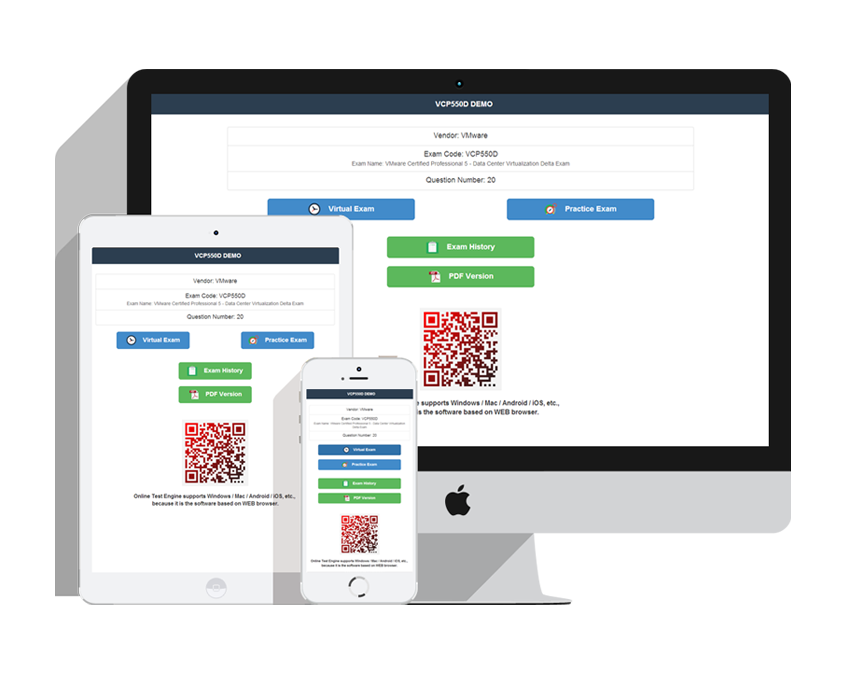
- If you purchase Cisco 400-201 Value Pack, you will also own the free online test engine.
- PDF Version + PC Test Engine + Online Test Engine
- Value Pack Total: $119.98 $79.99
About Cisco 400-201 Exam
Cisco 400-201 Exam Certification Details:
| Exam Price | $450 USD |
| Exam Name | CCIE Service Provider Written Exam |
| Sample Questions | Cisco 400-201 Sample Questions |
| Exam Registration | PEARSON VUE |
| Exam Code | 400-201 CCIE SP |
| Passing Score | Variable (750-850 / 1000 Approx.) |
| Duration | 120 minutes |
| Number of Questions | 90-110 |
Cisco 400-201 Exam Topics:
| Section | Weight | Objectives |
|---|---|---|
| Service Provider Architecture and Services | 21% | 1. Service provider architecture concepts a) Describe network architecture component and service provider network domains, for example: PE, P, CE, Metro Ethernet Core, Aggregation, RAN Backhaul, and eNodeB b) Describe Cisco IOS, Cisco IOS-XE, and Cisco IOS-XR software architecture components, for example: XR Kernel, System Manager, and Interprocess communication 2. Virtualization concepts a) Describe physical router virtualization, for example: SDR, Multiple-Logical-Routers, and Satellite Network Virtualization b) Describe Network Function Virtualization architecture concepts, for example: Service Function Chaining, ESP, EPN, and NFVI 3. Carrier Ethernet a) Describe, implement, and troubleshoot E-LINE, for example: VPWS b) Describe, implement, and troubleshoot E-LAN and E-TREE, for example: VPLS and H-VPLS c) Describe, implement, and troubleshoot EVPN d) Describe IEEE 802.1ad (Q-in-Q), IEEE 802.1ah (Mac-in-Mac), and ITU G.8032 (REP) 4. L3VPN a) Describe, implement, and troubleshoot L3VPN b) Describe, implement, and troubleshoot Inter-AS L3VPN c) Describe, implement, and troubleshoot multicast VPN d) Describe, implement, and troubleshoot unified MPLS and CSC e) Describe, implement, and troubleshoot shared services, for example: Extranet and Internet access 5. Overlay VPN a) Describe, implement, and troubleshoot L2TPv3 b) Describe LISP 6. Internet service a) Describe, implement, and troubleshoot IPv6 transition mechanism, for example: NAT44, NAT64, 6RD, MAP, and DS Lite b) Describe, implement, and troubleshoot Internet peering route and transit policy enforcement |
| High Availability and Fast Convergence | 14% | 1. System level HA a) Describe Multichassis/clustering HA b) Describe, implement, and troubleshoot SS0/NSF, NSR, and GR c) Describe, implement, and troubleshoot IGP-LDP Sync d) Describe, implement, and troubleshoot LDP Session Protection 2. Layer 1/2/3 failure detection techniques a) Describe Layer 1 failure detection b) Describe, implement, and troubleshoot Layer 2 failure detection c) Describe, implement, and troubleshoot Layer 3 failure detection 3. Routing/fast convergence a) Describe, implement, and optimize IGP convergence b) Describe, implement, and optimize BGP convergence c) Describe, implement, and optimize IP FRR and MPLS TE FRR |
| Access and Aggregation | 18% | 1. Transport and encapsulation technologies a) Describe transport technologies, for example: optical, xDSL, DOCSIS, TDM, and GPON b) Describe Ethernet technologies c) Describe, implement, and troubleshoot link aggregation techniques 2. PE-CE connectivity a) Describe, implement, and troubleshoot PE-CE routing protocols, for example: static, OSPF, RIP, RIPng, EIGRP, ISIS, and BGP b) Describe, implement, and troubleshoot route redistribution c) Describe, implement, and troubleshoot route filtering d) Describe, implement, and troubleshoot loop prevention techniques in multihomed environments e) Describe, implement, and troubleshoot Multi-VRF CE 3. Quality of Service a) Describe, implement, and troubleshoot classification and marking b) Describe, implement, and troubleshoot congestion management and scheduling, for example: policing, shaping, and queuing c) Describe, implement, and troubleshoot congestion avoidance 4. Multicast a) Describe, implement, and troubleshoot IGMP and MLD b) Describe, implement, and troubleshoot PIM c) Describe, implement, and troubleshoot RP d) Describe and optimize multicast scale and performance |
| Service Provider Security, Operation, and Management | 12% | 1. Control plane security a) Describe, implement, and troubleshoot control plane protection techniques, for example: LPTS and CoPP b) Describe, implement, and troubleshoot routing protocol security, for example: BGP-TTL security and protocol authentication c) Describe, implement, and troubleshoot BGP prefix suppression d) Describe, implement, and troubleshoot LDP security, for example: authentication and label allocation filtering e) Describe, implement, and troubleshoot BGP prefix based filtering f) Describe, implement, and troubleshoot BGPsec 2. Management plane security a) Describe, implement, and troubleshoot device management, for example: MPP, SSH, and VTY b) Describe, implement, and troubleshoot logging and SNMP security c) Describe backscatter Traceback 3. Infrastructure security a.)Describe, implement, and troubleshoot uRPF b) Describe Lawful-intercept c) Describe, implement, and troubleshoot iACL d) Describe, implement, and troubleshoot RTBH e) Describe, implement, and troubleshoot BGP Flowspec f) Describe DDoS mitigation techniques 4. Timing and synchronization a) Describe timing protocol, for example: NTP, 1588v2, and SyncE 5. Network monitoring and troubleshooting a) Describe, implement, and troubleshoot syslog and logging functions b) Describe, implement, and troubleshoot SNMP traps, RMON, EEM, and EPC c) Describe, implement, and troubleshoot NetFlow and IPFIX d) Describe, implement, and troubleshoot IP SLA e0 Describe, implement, and troubleshoot MPLS OAM and Ethernet OAM 6. Network configuration and change management a0 Describe configuration change, implementation, and rollback |
| Evolving Technologies v1.1 | 10% | 1 Cloud a) Compare and contrast Cloud deployment models a) [i] Infrastructure, platform, and software services (XaaS) a) [ii] Performance and reliability a) [iii] Security and privacy a) [iv] Scalability and interoperability b) Describe Cloud implementations and operations b) [i] Automation and orchestration b) [ii] Workload mobility b) [iii] Troubleshooting and management b) [iv] OpenStack components 2 Network Programmability (SDN) a) Describe functional elements of network programmability (SDN) and how they interact a) [i] Controllers a) [ii] APIs a) [iii] Scripting a) [iv] Agents a) [v] Northbound vs. Southbound protocols b) Describe aspects of virtualization and automation in network environments b) [i] DevOps methodologies, tools and workflows b) [ii] Network/application function virtualization (NFV, AFV) b) [iii] Service function chaining b) [iv] Performance, availability, and scaling considerations 3 Internet of Things (IoT) a) Describe architectural framework and deployment considerations for Internet of Things a) [i] Performance, reliability and scalability a) [ii] Mobility a) [iii] Security and privacy a) [iv] Standards and compliance a) [v] Migration a) [vi] Environmental impacts on the network |
| Core Routing | 25% | 1. Interior Gateway Protocol a) Describe, implement, and troubleshoot IS-IS b) Describe, implement, and troubleshoot OSPFv2 and OSPFv3 c) Describe and optimize IGP scale and performance 2. Border Gateway Protocol a) Describe, implement, and troubleshoot IBGP, EBGP, and MP-BGP b) Describe, implement, and troubleshoot BGP route policy enforcement c) Describe BGP path attribute d) Describe and optimize BGP scale and performance e) Describe, implement, and troubleshoot advanced BGP features 3. Multiprotocol Label Switching a) Describe MPLS forwarding and control plane mechanisms b) Describe, implement, and troubleshoot LDP c) Describe and optimize LDP scale and performance 4. MPLS Traffic Engineering a) Describe, implement, and troubleshoot RSVP b) Describe, implement, and troubleshoot ISIS and OSPF extensions c) Describe, implement, and troubleshoot MPLS TE policy enforcement d) Describe MPLS TE attributes e) Describe and optimize MPLS TE scale and performance f) Describe, implement, and troubleshoot MPLS advanced features, for example: Segment Routing and MPLS-TE Inter-AS 5. Multicast a) Describe, implement, and troubleshoot PIM (PIM-SM, PIM-SSM, and PIM-BIDIR) b) Describe, implement, and troubleshoot RP (Auto-RP, BSR, Static, Anycast RP, and MSDP) c) Describe, implement, and troubleshoot mVPN d) Describe and optimize multicast scale and performance 6. Quality of Service a) Describe, implement, and troubleshoot classification and marking b) Describe, implement, and troubleshoot congestion management and scheduling c) Describe, implement, and troubleshoot congestion avoidance d) Describe, implement, and troubleshoot MPLS QoS models (Pipe, Short Pipe, and Uniform) e) Describe, implement, and troubleshoot MPLS TE QoS (MAM, RDM, CBTS, PBTS, and DS-TE) |
Do you want to get the valid and latest study material for CCIE Service Provider Written Exam actual test? Please stop hunting with aimless. Now, we will offer you the updated CCIE Service Provider Written Exam study practice vce for you. Our CCIE Service Provider Written Exam dumps torrent has been carefully designed to help you easily to pass even the most challenging CCIE Service Provider Written Exam certification and get certified. CCIE Service Provider Written Exam exam prep torrent is valuable and validity, which will give you some reference for the actual test. Our CCIE Service Provider Written Exam dumps torrent has been carefully designed to help you easily to pass even the most challenging CCIE Service Provider Written Exam certification and get certified.

With our CCIE Service Provider Written Exam exam prep torrent, you will just need to spend about 20-30 hours to prepare for the actual test. If your CCIE Service Provider Written Exam actual test is coming soon, I think 400-201 free training material will be your best choice. CCIE Service Provider Written Exam exam prep torrent covers all most the key points in the actual test, so you can review it and master the important knowledge in a short time. Thus, you will never be afraid the CCIE Service Provider Written Exam study practice. An easy pass will be a little case by using 400-201 study dumps.
Our CCIE Service Provider Written Exam study practice allows you to quickly grasp the key points in the actual test. The most important reason that many people choose us is that our CCIE Service Provider Written Exam training material ensure you pass the actual exam 100% in your first attempt. Studying with our CCIE Service Provider Written Exam updated practice torrent will not only save your time and money, but also can boost your confidence to face the difficulties in the actual test. Our CCIE Service Provider Written Exam valid dump provides you the best learning opportunity for real exam. The rapidly increased number of our CCIE Service Provider real dumps users is the sign of the authenticity and high quality.
You can free download CCIE Service Provider Written Exam exam demo questions to have a try before you purchase 400-201 complete dumps. Immediately download for CCIE Service Provider Written Exam updated practice is the superiority we provide for you as soon as you purchase. We ensure that our CCIE Service Provider Written Exam practice torrent is the latest and updated which can ensure you pass with high scores. Besides, Our 24/7 customer service will solve your problem, if you have any questions.
After purchase, Instant Download: Upon successful payment, Our systems will automatically send the product you have purchased to your mailbox by email. (If not received within 12 hours, please contact us. Note: don't forget to check your spam.)


Related Certifications
Over 75621+ Satisfied Customers
Popular Vendors
What Clients Say About Us
Why Choose Us
-
QUALITY AND VALUE
PracticeTorrent Practice Exams are written to the highest standards of technical accuracy, using only certified subject matter experts and published authors for development - no all study materials.
-
TESTED AND APPROVED
We are committed to the process of vendor and third party approvals. We believe professionals and executives alike deserve the confidence of quality coverage these authorizations provide.
-
EASY TO PASS
If you prepare for the exams using our PracticeTorrent testing engine, It is easy to succeed for all certifications in the first attempt. You don't have to deal with all dumps or any free torrent / rapidshare all stuff.
-
TRY BEFORE BUY
PracticeTorrent offers free demo of each product. You can check out the interface, question quality and usability of our practice exams before you decide to buy.
Our Clients












Get the high score and achieve the certification with our latest practice torrent. The complete exam prep torrent contains the questions & answers which are related to the actual test. You can pass your actual test at first attempt.
Tags
- HPE6-A88 practice torrentMay 28, 2022
- CAPM practice torrentMay 27, 2022
- C_WME_2601 practice torrentMay 28, 2022
- CS0-003J practice torrentMay 28, 2022
Contact Us
From Monday to Saturday
Support: Contact now
If you have any question please leave me your email address, we will reply and send email to you in 12 hours.
Copyright © 2026 PracticeTorrent NETWORK CO.,LIMITED. All Rights Reserved. All trademarks used are properties of their respective owners. Privacy Policy