It is well known that the SecOps-Generalist certification enjoy a high reputation in this field. Obtaining the SecOps-Generalist certification means you get the access to the big international companies. Except a considerable salary and benefits, you will have a chance to make friends with some influential people and work with extraordinary guys. While the best way to prepare for the SecOps-Generalist actual test is to assist with a valid and useful SecOps-Generalist exam prep dumps. The following is the character of the SecOps-Generalist training material.

SecOps-Generalist online test engine
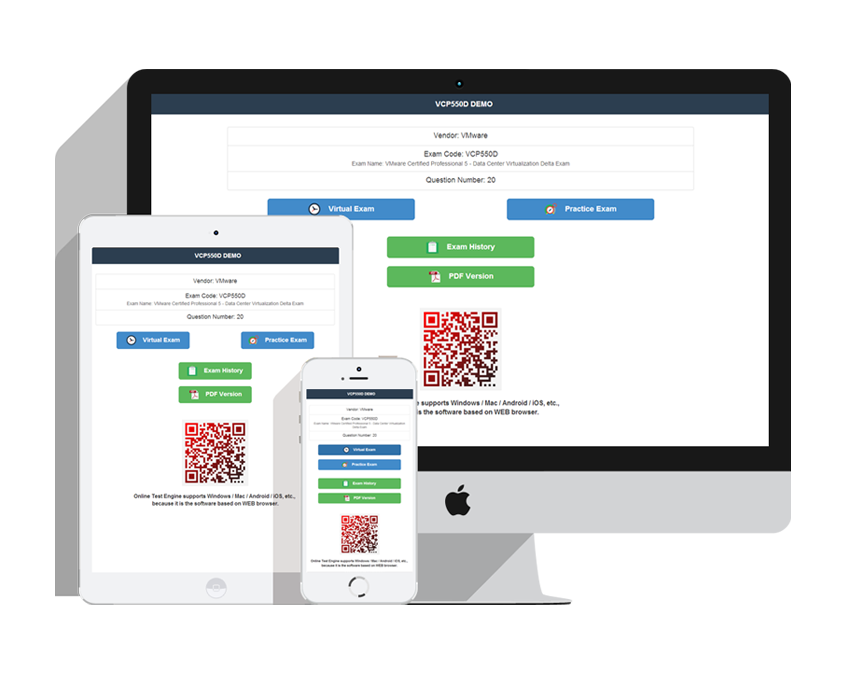
With the SecOps-Generalist online test engine, you can experience the actual test environment during the practice. It is suitable for any electronic device with any limit, such as: Windows/Mac/Android/iOS operating systems. When you use the SecOps-Generalist online test engine, you can set the test time with each practice and get the test score after finished the test. Besides, the questions which you have made mistake can be marked for next review. With so many intelligence advantages, you can get many benefits from our SecOps-Generalist online test engine.
99% pass rate for one time pass
We offer you SecOps-Generalist exam prep dumps to help you learn the key knowledge of the test. And you just need to spend one or two days to practice SecOps-Generalist training questions and know your weakness and strength during the preparation. The pass rate is reach to 99% because SecOps-Generalist updated study material is composed by our professional colleague who has rich experience. The content of SecOps-Generalist exam practice dumps is comprehensive and detail, which can help you have a good knowledge of the actual test. With the enough study buy our SecOps-Generalist training study, you can be confident to deal with any difficulties in the actual test.
Free download SecOps-Generalist free demo
We are providing SecOps-Generalist free demo for customers before they decide to buy our dumps. Free demos are so critical that it can see the SecOps-Generalist dumps' direct quality. You can freely download the SecOps-Generalist free demo questions before purchase. There are part SecOps-Generalist exam questions and answers, not having all the questions. Besides, delivery time is very short. It's about several seconds to 30 minutes to get the SecOps-Generalist exam dumps after purchase. When you pay successfully of for the SecOps-Generalist practice test, you will receive our emails containing SecOps-Generalist test dumps. Using our SecOps-Generalist training practice, you will enjoy more warm and convenient online service.
We've set full refund policy for our customers to reduce their risk of exam failure. You could get full refund if you fail the SecOps-Generalist actual test. After you buy SecOps-Generalist test dump from us, you will get the latest update version freely in your email for 1 year.
After purchase, Instant Download: Upon successful payment, Our systems will automatically send the product you have purchased to your mailbox by email. (If not received within 12 hours, please contact us. Note: don't forget to check your spam.)
Palo Alto Networks SecOps-Generalist Exam Syllabus Topics:
| Section | Weight | Objectives |
|---|
| Topic 1: Threat Intelligence and Incident Response | 16% | - NIST incident response lifecycle and processes
- Threat intelligence sources: WildFire, Unit 42, open feeds
- Incident categorization, prioritization, and handling
- Threat hunting and false positive/negative analysis
- Indicator types: IP, domain, URL, file hash, behavioral
|
| Topic 2: Cortex XSOAR | 18% | - Playbooks, automation, and orchestration workflows
- Case management and incident lifecycle automation
- Integrations, content packs, and customization
- Threat intelligence management and enrichment
- Platform architecture and core components
|
| Topic 3: Security Operations Fundamentals | 25% | - Reporting, dashboards, and analytics
- Log management, data ingestion, and retention
- SOC roles, responsibilities, and workflows
- AI and machine learning in security operations
- Compliance frameworks and data protection
|
| Topic 4: Cortex XDR | 23% | - Integration with third-party tools and threat feeds
- Incident investigation, response, and remediation
- Deployment, sensors, and data collection
- Detection rules, behavioral analytics, and alerts
- Log stitching, causality analysis, and visibility
|
| Topic 5: Cortex XSIAM | 18% | - Compliance, reporting, and operational visibility
- Content packs, rules, and analytics models
- Automation, playbooks, and response actions
- Alert triage, investigation, and threat detection
- Data ingestion, normalization, and correlation
|
Palo Alto Networks Security Operations Generalist Sample Questions:
An administrator is reviewing traffic logs on a Palo Alto Networks NGFW and sees sessions attributed to various Device-ID categories (e.g., 'Windows Desktop', 'Android Mobile', 'IP Camera', 'Unknown Device'). Where does the firewall obtain the information used to classify sessions into these Device-ID categories?
- A. By querying an external asset management database via API.
- B. From passive analysis of network traffic, including DHCP information, HTTP headers, and TCP/IP stack fingerprinting.
- C. Through integration with Active Directory or LDAP.
- D. From static assignments manually configured by the administrator for each IP address.
- E. From endpoint agents installed on the devices.
Reveal Solution
Discussion
Correct Answer: B 🗳️
Explanation: Only visible for PracticeTorrent members. You can sign-up / login (it's free).
An administrator is reviewing AIOps for NGFW insights. They see a finding related to 'Security Policy Rule Usage'. This finding highlights several policy rules that have not generated any traffic logs within the last 30 days. What is the primary administrative benefit of AIOps identifying these unused policy rules?
- A. It suggests that the firewall's logging configuration is incorrect and needs adjustment.
- B. It indicates a potential misconfiguration in the firewall's routing or NAT settings.
- C. It highlights rules that are explicitly configured to not generate logs.
- D. It means the applications or users specified in these rules are not active on the network.
- E. It identifies rules that can be safely removed or reviewed for potential misconfiguration (e.g., never matched due to incorrect criteria), simplifying the policy set and reducing attack surface.
Reveal Solution
Discussion
Correct Answer: E 🗳️
Explanation: Only visible for PracticeTorrent members. You can sign-up / login (it's free).
A company uses GlobalProtect on a self-managed PA-Series firewall to provide remote access. They have internal network segments defined by VLANs (e.g., Production Servers VLAN 10, Development Servers VLAN 20, User VLAN 30). Users connecting via GlobalProtect are assigned IP addresses from a dedicated VPN pool (e.g., 172.16.1.0/24). The security policy needs to restrict remote users' access to specific applications on specific server VLANs based on their user group and device compliance. How are Security Zones used to implement this segmentation and access control for remote user traffic interacting with internal resources? (Select all that apply)
- A. Ensure the GlobalProtect tunnel interface or subinterface that receives user traffic is assigned to the 'VPN-Zone'.
- B. Define distinct Security Zones for each internal VLAN (e.g., 'Prod-Zone', 'Dev-Zone').
- C. Traffic between remote users (within the VPN IP pool) is implicitly allowed by the intra-zone-default rule because they are in the same 'VPN-Zone'.
- D. Create Security Policy rules with the Source Zone as 'VPN-Zone' and Destination Zone(s) as the respective internal server zones ('Prod-Zone', 'Dev-Zone').
- E. Define a dedicated Security Zone for the GlobalProtect VPN user pool (e.g., 'VPN-Zone').
Reveal Solution
Discussion
Correct Answer: A,B,D,E 🗳️
Explanation: Only visible for PracticeTorrent members. You can sign-up / login (it's free).
An organization is using Device-ID and potentially the IoT Security subscription to gain visibility into the diverse endpoints on their network. A security policy needs to allow specific types of devices (e.g., 'Corporate Printers', 'Approved IP Cameras') to access certain network resources while restricting 'Unknown Devices' or 'Personal Devices' from accessing sensitive segments. Which of the following are valid ways to leverage Device-ID and related features in Security Policy rules on a Palo Alto Networks NGFW? (Select all that apply)
- A. Applying different security profiles (Threat, URL, etc.) based on the Device-ID category identified for a session, within the same Security Policy rule.
- B. Creating HIP Objects that match Device-ID categories and using these HIP Objects in the 'Source User' or 'HIP Profile' tab of a Security Policy rule.
- C. Configuring Authentication Policy rules that require users on specific Device-ID categories to authenticate.
- D. Creating dynamic Address Groups based on Device-ID categories and using these Address Groups in the 'Source Address' or 'Destination Address' fields of a Security Policy rule.
- E. Using Device-ID categories directly in the 'Source' or 'Destination' tabs of a Security Policy rule (e.g., Source 'Device Category: Corporate Printers').
Reveal Solution
Discussion
Correct Answer: B,C,D,E 🗳️
Explanation: Only visible for PracticeTorrent members. You can sign-up / login (it's free).
An administrator has configured SSL Forward Proxy decryption for outbound internet traffic on a Palo Alto Networks NGFW They want to exclude a specific application internal-app') running on HTTPS (port 443) from decryption because it uses client-side certificates. The 'internal-app' is hosted externally but accessed by internal users. There is a general 'Decrypt all outbound HTTPS' rule lower in the policy. Which configuration steps are necessary to create the exclusion rule?
- A. Remove the 'SSI' service from the 'Decrypt all outbound HTTPS' rule and create a separate rule for 'internal-app' with no decryption.
- B. Create a Security policy rule with Action 'No Decrypt', Source Zone 'internal', Destination Zone 'external', Application 'internal-app', and place this rule above the 'Decrypt all outbound HTTPS' rule.
- C. Edit the 'Decrypt all outbound HTTPS' rule and add the 'internal-app' to its exclusion list within the rule options.
- D. Create a Decryption policy rule with Action 'No Decrypt', Source Zone 'internal', Destination Zone 'external', Application 'internal-app', and place this rule above the 'Decrypt all outbound HTTPS' rule.
- E. Create a custom URL Category for the 'internal-app' domain and add this URL Category to the Decryption Profile used by the 'Decrypt all outbound HTTPS' rule.
Reveal Solution
Discussion
Correct Answer: D 🗳️
Explanation: Only visible for PracticeTorrent members. You can sign-up / login (it's free).


 PDF Version Demo


 Michelle
 Theresa
  Oscar
Oscar  Amos
Amos 
 Lennon
 Levi
Levi  Gwendolyn
  Xavier
  Irene
Irene  Edgar
Edgar  Eden
Eden  Meredith
  Bonnie
  Adonis