

But yours are really the latest PSM-III real questions.
 Woodrow


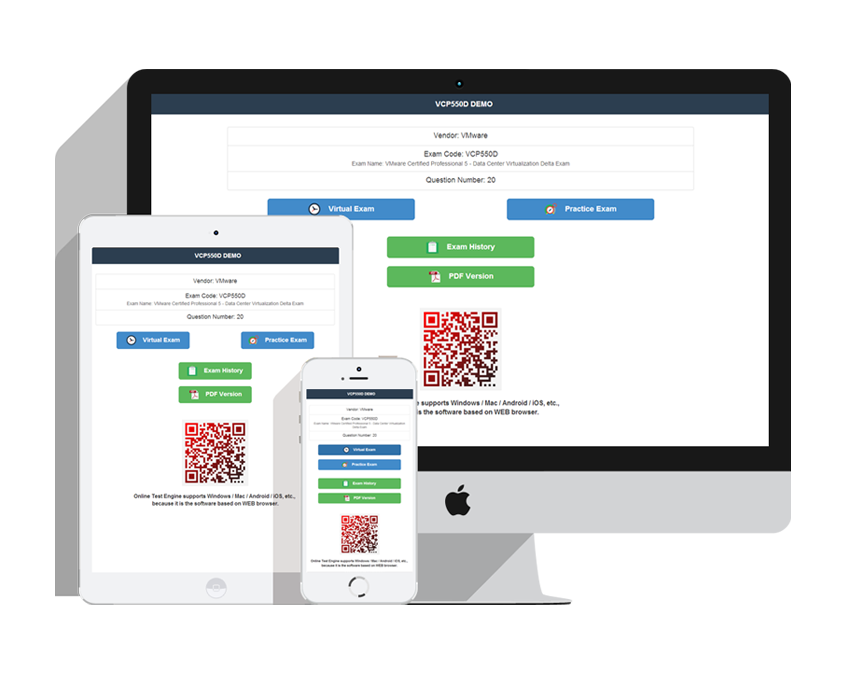
 PDF Version Demo


Exam questions drift over time, and a stale bank quietly sinks scores. PracticeTorrent keeps the Scrum Professional Scrum Master level III (PSM III) collection refreshed and sends new versions free for 365 days — through 2026 and whatever Scrum changes next.
| Section | Objectives |
|---|---|
| Done and Undone Work | - Definition of Done |
| Product Backlog Management | - Stakeholder Management - Backlog Refinement |
| The Scrum Framework | - Scrum Roles - Scrum Events - Scrum Artifacts |
| Scrum Theory and Empiricism | - Empirical process control - Complex adaptive systems - Scrum Values |
| Scrum in the Organization | - Organizational Design and Culture - Scaling Scrum |
| Facilitation and Coaching | - Coaching - Teaching - Facilitation |
A seat at the Scrum Professional Scrum Master level III (PSM III) exam costs USD 500, and the score that separates pass from fail is 85%. Miss it, and USD 500 is due again for the retake. Before you book, drill with PracticeTorrent practice questions until your timed results clear 85% with margin — then the exam fee is a one-time expense.
The PSM-III exam is spread across 6 knowledge areas. The dominant ones are Scrum Theory and Empiricism, The Scrum Framework, Done and Undone Work — study them in proportion to their share. The complete domain-by-domain outline is right above this section.
It is recommended to have passed PSM I and PSM II prior to attempting PSM III. Significant experience as a Scrum Master is highly recommended. Requirements like these are set by Scrum and evolve over time, so verify the latest version on the official exam page: https://www.scrum.org/professional-scrum-master-iii-certification before you register for the Scrum Professional Scrum Master level III (PSM III) exam.
Yes — PracticeTorrent offers a free download of Scrum Professional Scrum Master level III (PSM III) sample questions and answers so you can judge our reliability yourself. Every purchase afterward includes 365 days of free updates; once that year ends, extend the update service at a 50% discount from your member zone.
The PSM-III exam is Scrum's official skills test — pass it and you earn the Professional Scrum Master certification, a credential aimed at the Expert tier. Its influence comes from practicality: it measures the abilities employers actually need from certified staff, which is why the Scrum Professional Scrum Master level III (PSM III) credential shows up in job listings across the industry. It also relates to Professional Scrum Master I (PSM I), Professional Scrum Master II (PSM II), giving your certification plan a natural next step.
You face 30 questions inside 120 minutes on the Scrum Professional Scrum Master level III (PSM III) exam. Divide one by the other and the pacing target becomes obvious — most candidates need two to three timed rehearsals before that rhythm feels natural. Use the PracticeTorrent test engine for exactly that: full-length, clocked sessions until finishing 120 minutes without panic is your new baseline.
Delivery is instant: once payment clears, the PSM-III product is emailed to you within one minute — no email after 2 hours (check spam first), and support resends it right away. There is no limit on installations. On failure, the refund policy protects you when the following holds: you sat the corresponding PSM-III exam within 60 days of purchase, and you submit a scanned enrollment slip plus the official Score Report PDF within 2 days after the exam. Refunds complete within 7 days. Not covered: attempts within 3 days of purchase, exams never actually taken, free materials, expired orders — and the candidate's name must match the payer's. If you prefer, exchange the product for two free exam products of equal value and keep the update service on your original purchase.
Decisions to optimise value and control risk are made based on the perceived state of the artefacts. What events and practises can improve transparency over the artefacts? Explain why.
Reveal Solution Discussion 0Correct Answer:
In Scrum, decisions to optimize value and control risk depend on theperceived state of the artifacts. If artifacts are not transparent, inspection and adaptation become ineffective, leading to poor decisions. Scrum therefore defines specificevents and practicesto improve transparency and support empirical decision- making.
Scrum Events That Improve Artifact Transparency
Sprint Planningimproves transparency by aligning the Scrum Team on the current state of theProduct Backlogand theProduct Increment. The Product Owner explains backlog ordering and objectives, while Developers assess what is feasible based on the current Increment and Definition of Done. This shared understanding reduces risk by creating a realistic Sprint Goal.
Daily Scrumimproves transparency of theSprint Backlog. Developers inspect progress toward the Sprint Goal and make visible emerging risks, dependencies, and impediments. Daily inspection ensures that deviations are discovered early, enabling fast adaptation and reducing delivery risk.
Sprint Reviewimproves transparency of theProduct IncrementandProduct Backlog. Stakeholders directly inspect the Increment and provide feedback. This exposes assumptions, validates value, and informs Product Backlog adaptation, helping optimize future value and reduce market risk.
Sprint Retrospectiveimproves transparency ofprocess-related aspectsthat influence the artifacts. By inspecting ways of working, tools, skills, and the Definition of Done, the team identifies improvements that increase artifact quality and reliability over time.
Practices That Improve Transparency
Aclear and shared Definition of Doneensures transparency of the Product Increment. It creates a common understanding of what "complete" means and prevents hidden work or misleading progress.
Product Backlog refinementimproves transparency by clarifying Product Backlog Items, making assumptions explicit, and reducing uncertainty. Although not a formal Scrum event, refinement supports better inspection and forecasting.
Frequent integration and testingimprove transparency by making the real state of the Increment visible early and often. This reduces the risk of late surprises and unintegrated work.
Visible metrics and information radiators(such as Sprint Goals, Sprint Backlogs, and progress toward objectives) help stakeholders and teams understand the state of work without relying on reports or interpretations.
In what ways does the Scrum Master attend the Sprint Retrospective?
Reveal Solution Discussion 0Correct Answer:
The Sprint Retrospective is a formal Scrum event where the Scrum Team inspects how the last Sprint went with respect toindividuals, interactions, processes, tools, and their Definition of Done, and identifies improvements for future Sprints. The Scrum Master attends the Sprint Retrospective inmultiple, complementary ways, consistent with the Scrum Guide.
First, the Scrum Masterjoins the Sprint Retrospective as a Scrum Team member. The Scrum Guide defines the Scrum Team as consisting of the Product Owner, Developers, and the Scrum Master. Therefore, the Scrum Master is not an external observer but afull participantin the event. As such, the Scrum Master activelyinspects people, processes, and tools, and contributes insights based on their perspective and experience, while remaining respectful of the team's self-management.
Second, the Scrum Master oftenfacilitates the Sprint Retrospective. According to the Scrum Guide, the Scrum Master is accountable for ensuring that Scrum events take place and are productive. Facilitation may include helping the team create a safe environment, encouraging openness, ensuring balanced participation, keeping the discussion focused on improvement, and helping the team stay within the timebox. However, facilitation does not imply control; the Scrum Master facilitatesto serve the team, not to direct outcomes.
Third, the Scrum Mastersupports empiricism during the Retrospective. By fostering transparency, encouraging honest inspection, and helping the team identify actionable improvements, the Scrum Master strengthens the Scrum pillars oftransparency, inspection, and adaptation. The Scrum Master may also help the team turn improvement ideas into concrete actions that can be planned for the next Sprint.
Finally, the Scrum Master helps ensure that the Sprint Retrospective results inmeaningful adaptation. While the Scrum Team decides what improvements to implement, the Scrum Master supports the team in identifying impediments, coaching on improvement techniques, and helping remove organizational or systemic obstacles that are beyond the team's direct control.
In summary, the Scrum Master attends the Sprint Retrospective byjoining as a full Scrum Team member, participating in inspection,often facilitating the event, andsupporting continuous improvement and empiricism. This balanced participation ensures that the Retrospective remains a powerful mechanism for learning and adaptation rather than a ritualistic meeting.
Technical systems can be decomposed to composite elements, from the large to the small. Basic components may be represented as activities, workflows, functions, features, capabilities, and other similar nomenclature.
How does this system decomposition affect Scrum Teams on scaled projects?
Correct Answer:
Technical systems are often decomposed into smaller elements such as activities, workflows, functions, features, or components to manage complexity. While decomposition is necessary for understanding and building large systems, it has significant implications forScrum Teams, especially inscaled environments.
1. Risk of Component-Centric Team Structures
When system decomposition drives team structure, organizations often createcomponent or specialist teams aligned to technical layers or functions. In scaled Scrum, this increases:
* Dependencies between teams,
* Coordination overhead,
* Integration risk.
Such structures make it difficult for teams to deliverend-to-end, integrated Incrementseach Sprint, weakening empiricism and delaying feedback.
2. Impact on Value Delivery and Inspection
Scrum relies on frequent inspection ofworking product Increments. If work is decomposed into narrowly defined technical components, individual teams may only deliver partial outputs rather than usable value. This reduces transparency and makes meaningful inspection at the product level harder, especially when multiple teams are involved.
3. Preference for Feature-Oriented Decomposition
Scrum favors decomposing work intovertical, value-oriented slices(features or capabilities) rather than horizontal technical layers. This allows each Scrum Team to be:
* Cross-functional,
* Capable of delivering usable Increments independently,
* Less dependent on other teams.
In scaled projects, feature-oriented decomposition reduces dependencies and improves flow.
4. Effects on Integration and Empiricism
Poor decomposition increases the cost of integration and often leads to late or infrequent integration. Scrum requires that integration happensearly and often, as unintegrated work is not "Done." In scaled Scrum, decomposition choices directly influence whether integration is continuous or deferred, with major implications for risk control.
5. Organizational and Learning Implications
System decomposition also affects learning and adaptability. When teams own complete features rather than isolated components, they gain a better understanding of:
* Customer needs,
* System behavior,
* Trade-offs across the product.
This broader understanding improves decision-making and supports continuous improvement across the system.
One of the Scrum events is the Sprint Review. How does the Sprint Review enable empiricism? What would the impact be if some members of the development team were not present?
Reveal Solution Discussion 0Correct Answer:
TheSprint Reviewis a key Scrum Event that directly enablesempiricism, which is the foundation of Scrum.
Empiricism is based on making decisions using what is known, observed, and learned, supported by the pillars oftransparency, inspection, and adaptation. The Sprint Review operationalizes these pillars at the product level.
How the Sprint Review Enables Empiricism
First, the Sprint Review createstransparencyby making the current state of the product visible. During the event, the Scrum Team presents a"Done" Product Incrementthat meets the Definition of Done. Stakeholders can see and often use the actual product rather than relying on reports or assumptions. This shared visibility ensures that discussions are grounded in reality.
Second, the Sprint Review enablesinspection. The Scrum Team and stakeholders jointly inspect the Increment and assess progress toward product goals. The Developers provide context about what was delivered, what was not, and what challenges were encountered. This inspection is focused on outcomes and value, not individual performance.
Third, the Sprint Review supportsadaptation. Based on the inspection and feedback, new insights emerge about customer needs, market conditions, risks, and opportunities. The Product Owner uses this information to adapt the Product Backlog, reordering items, adding new work, or refining existing items. This completes the empirical feedback loop by ensuring future decisions are based on the latest evidence.
Impact of Development Team Members Not Attending the Sprint Review
If some Developers are not present at the Sprint Review, empiricism is weakened.
First,transparency decreases. Developers possess critical, first-hand knowledge about implementation details, technical trade-offs, constraints, and risks. Without their presence, stakeholders receive an incomplete picture of the Increment and its implications.
Second,inspection becomes less effective. Stakeholders may ask questions about behavior, limitations, or quality that only Developers can accurately answer. The absence of Developers limits meaningful dialogue and reduces the quality of inspection.
Third,adaptation suffers. Decisions about what to do next-such as changes to scope, priorities, or technical direction-depend on accurate understanding. Without Developers participating, adaptations to the Product Backlog may be based on assumptions rather than evidence, increasing the risk of poor decisions.
Finally, excluding Developers underminesScrum Values, particularlyRespect and Openness, by treating the Sprint Review as a reporting event rather than a collaborative working session. This can lead to disengagement and reduced shared ownership of product outcomes.
Viewing page 1 out of 9 pages.
Viewing questions 1-4 out of 36 questions.
Over 75621+ Satisfied Customers
But yours are really the latest PSM-III real questions.
Woodrow
Thank you very much! I was able to clear the PSM-III exam with 86% marks and on the first attempt. I really appreciate your help. You guys are doing great.
 Marcus
The Software version of this PSM-III exam braindumps is just like the real exam. And after practice for a week, i feel more confident to pass the exam. Thanks so much!
 Ellis
Ellis 
The PSM-III exam dumps are 92% valid the exam had the most question from the dumps.
 Algernon
To achieve success in exam, I hankered after a variety of exam materials but in the end they couldn't get me certification. Finally, it was PracticeTorrent Dumps for helpme pass
 Alexander
One of my juniors passed the PSM-III exam and surprised everyone in the office. It not only enhanced the skills of our team but also put enormous pressure on me to get this exam cleared as well. Thanks to PracticeTorrent
 Marlon
When I first visited PracticeTorrent , I had no idea that their questions and answers could be as helpful as they claim about them.
 Marvin
I could have never passed my PSM-III exam. I clear them in a short time and pass it with a maximum score.
 Blithe
This PSM-III exam dumps is really helpful for my PSM-III examination. I secured 93% marks not only to pass my exam but also to get promotional benefits right away.
 Adelaide
Recommend your dumps to my friends. Really good questions. I pass just now.
 Winston
This site is a life saver.
I passed PSM-III exam again
 Geoff
Geoff
I got the downloading link for PSM-III about ten minutes after payment, I appreciated the instant download.
 Wythe
Wythe
hello. passed PSM-III exam in today with a 97%
 Perry
Perry
I took the PSM-III exam last month and passed in first attempt. Thank a lot for helping me to pass the PSM-III exam.
 Leonard
I passed my PSM-III exam successfully.
 Laurel
Trust your quality and service for the dump PSM-III
 Jim
Jim
This site prepared me for PSM-III exam so well, that I finished the exam with one hours to spare, and passed the PSM-III exam with the score of 92%.
 Malcolm
PracticeTorrent Practice Exams are written to the highest standards of technical accuracy, using only certified subject matter experts and published authors for development - no all study materials.
We are committed to the process of vendor and third party approvals. We believe professionals and executives alike deserve the confidence of quality coverage these authorizations provide.
If you prepare for the exams using our PracticeTorrent testing engine, It is easy to succeed for all certifications in the first attempt. You don't have to deal with all dumps or any free torrent / rapidshare all stuff.
PracticeTorrent offers free demo of each product. You can check out the interface, question quality and usability of our practice exams before you decide to buy.











Get the high score and achieve the certification with our latest practice torrent. The complete exam prep torrent contains the questions & answers which are related to the actual test. You can pass your actual test at first attempt.
Copyright © 2026 PracticeTorrent NETWORK CO.,LIMITED. All Rights Reserved. All trademarks used are properties of their respective owners. Privacy Policy
