

Hey guys, i just took the OGEA-102 test and passed it, so i recommend all of you to have it.
 Malcolm


 PDF Version Demo


We offer you OGEA-102 exam prep dumps to help you learn the key knowledge of the test. And you just need to spend one or two days to practice OGEA-102 training questions and know your weakness and strength during the preparation. The pass rate is reach to 99% because OGEA-102 updated study material is composed by our professional colleague who has rich experience. The content of OGEA-102 exam practice dumps is comprehensive and detail, which can help you have a good knowledge of the actual test. With the enough study buy our OGEA-102 training study, you can be confident to deal with any difficulties in the actual test.
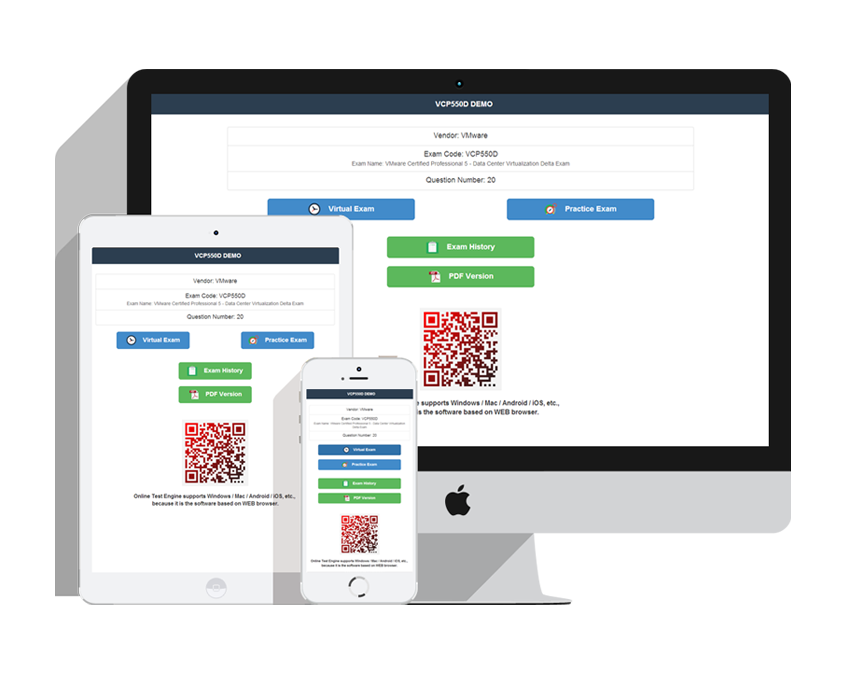
With the OGEA-102 online test engine, you can experience the actual test environment during the practice. It is suitable for any electronic device with any limit, such as: Windows/Mac/Android/iOS operating systems. When you use the OGEA-102 online test engine, you can set the test time with each practice and get the test score after finished the test. Besides, the questions which you have made mistake can be marked for next review. With so many intelligence advantages, you can get many benefits from our OGEA-102 online test engine.
It is well known that the OGEA-102 certification enjoy a high reputation in this field. Obtaining the OGEA-102 certification means you get the access to the big international companies. Except a considerable salary and benefits, you will have a chance to make friends with some influential people and work with extraordinary guys. While the best way to prepare for the OGEA-102 actual test is to assist with a valid and useful OGEA-102 exam prep dumps. The following is the character of the OGEA-102 training material.

We are providing OGEA-102 free demo for customers before they decide to buy our dumps. Free demos are so critical that it can see the OGEA-102 dumps' direct quality. You can freely download the OGEA-102 free demo questions before purchase. There are part OGEA-102 exam questions and answers, not having all the questions. Besides, delivery time is very short. It's about several seconds to 30 minutes to get the OGEA-102 exam dumps after purchase. When you pay successfully of for the OGEA-102 practice test, you will receive our emails containing OGEA-102 test dumps. Using our OGEA-102 training practice, you will enjoy more warm and convenient online service.
We've set full refund policy for our customers to reduce their risk of exam failure. You could get full refund if you fail the OGEA-102 actual test. After you buy OGEA-102 test dump from us, you will get the latest update version freely in your email for 1 year.
After purchase, Instant Download: Upon successful payment, Our systems will automatically send the product you have purchased to your mailbox by email. (If not received within 12 hours, please contact us. Note: don't forget to check your spam.)
| Section | Weight | Objectives |
|---|---|---|
| Topic 1: Stakeholder Management | 15-20% | - Stakeholder engagement and communication - Stakeholder identification and classification - Managing concerns and requirements |
| Topic 2: Context for Enterprise Architecture | 10-15% | - Business and IT alignment - Enterprise architecture value and benefits - Enterprise architecture principles and scope |
| Topic 3: Architecture Development Method (ADM) Phases | 30-35% | - Phase D: Technology Architecture - Phase F: Migration Planning - Phase G: Implementation Governance - Phase E: Opportunities and Solutions - Phase A: Architecture Vision - Phase C: Information Systems Architectures - Phase B: Business Architecture - Phase H: Architecture Change Management |
| Topic 4: Requirements Management | 10-15% | - Integration with ADM phases - Requirements capture and classification - Requirements traceability and management |
| Topic 5: ADM Application and Tailoring | 10-15% | - Scaling and adapting the framework - Tailoring ADM for different contexts - Using ADM with other frameworks |
| Topic 6: Architecture Governance | 10-15% | - Compliance and decision management - Governance frameworks and processes - Architecture maturity models |
Please read this scenario prior to answering the question
You are employed as an Enterprise Architect working within the Enterprise Architecture (EA) team at an electric vehicle manufacturer. The company focuses on designing, manufacturing, and advancing battery technology for sustainable transportation. The goal of the company is to build the best technology and software platform to support self-driving cars.
An architecture to support strategy has been completed defining a long-term Target Architecture with a roadmap over five years. This has identified the need for a portfolio of projects over the next two years. The portfolio includes development of an advanced driver assistance system using data gathered from multiple vehicles on the road.
The design of the presentation and accessibility of different types of data that the company plans to offer through its platform is challenging. It is important for the application portfolio to work securely with third- party cloud services, and V2X (Vehicle-to-Everything) service providers across many countries in order to effectively manage large amounts of data. Stakeholders are particularly concerned about the security of V2X.
Regulations in various markets mandate that user privacy must always be safeguarded, to prevent tracking and compiling of data that could reveal the drivers ' journey.
The company follows the TOGAF standard as the basis for its Enterprise Architecture practice and uses the purpose-based EA Capability model as described in the TOGAF Series Guide: A Practitioners ' Approach to Developing Enterprise Architecture Following the TOGAF ADM. The EA team reports to the Chief Information Officer (CIO), who is the sponsor of the EA program.
You have been assigned to lead the architecture development effort for the driver assistance system. A security resource plan and a vision for a security-specific architecture design have been completed. You have a meeting with the EA team leader to talk about the progress of your work.
Refer to the scenario
You have been asked how you will address risk and security at this stage of the architecture project.
Based on the TOGAF standard which of the following is the best answer?
Correct Answer: C 🗳️
Explanation: Only visible for PracticeTorrent members. You can sign-up / login (it's free).
Scenario
You are working as an Enterprise Architect within an Enterprise Architecture (EA) team at a global company that sells consumer products. The company produces many products that buyers use and enjoy.
The company has announced a major change to its products that will occur over a four-year period. This change includes the introduction of digital products and services. An architecture to support this strategy has been finished, along with a roadmap for a set of projects to implement this significant change. This will be a cross-functional effort between the product design and software teams. It is planned to be developed in phases.
The company faces a challenge in presenting and providing access to different services through its products and digital platforms while ensuring compliance with data privacy laws. In some countries and regions, the data residency requirements mean that the company has to store certain data within the region where it is collected. As a result, the company's application portfolio and infrastructure must connect with various cloud services and data repositories in different countries.
The EA team has inherited the architecture used by the current products, some of which can be carried over to the new products. The EA team has started to define which parts of the architecture to carry forward. Enough of the Business Architecture has been defined so that work can commence on the Information Systems and Technology Architectures. Those architectures need to be defined to support the key digital services that the company plans to provide.
The company uses the TOGAF Standard as the foundation for its Enterprise Architecture framework, and architecture development follows the purpose-based EA Capability model outlined in the TOGAF Series Guide: A Practitioner's Approach to Developing Enterprise Architecture Following the TOGAF ADM. The EA team reports to the Chief Information Officer (CIO), who oversees the program.
You have been asked how to decide and organize the work to deliver the requested architectures.
Based on the TOGAF standard, which of the following is the best answer?
Correct Answer: D 🗳️
Explanation: Only visible for PracticeTorrent members. You can sign-up / login (it's free).
Please read this scenario prior to answering the question
You are the Lead Enterprise Architect at a major agribusiness company. The company ' s main harvest is lentils, a highly valued food grown worldwide. The lentil parasite, broomrape, has been an increasing concern for many years and is now becoming resistant to chemical controls. In addition, changes in climate favor the propagation and growth of the parasite. As a result, the parasite cannot realistically be exterminated, and it has become pandemic, with lentil yields falling globally.
In response to the situation, the CEO has decided that the lentil fields will be used for another harvest. The company will also cease to process third-party lentils and will repurpose its processing plants. Thus, the target market will change, and the end-products will be different and more varied.
The company has recently established an Enterprise Architecture practice based on the TOGAF standard as method and guiding framework. The CIO is the sponsor of the activity. A formal request for architecture change has been approved. At this stage there is no fixed scope, shared vision, or objectives.
Refer to the scenario
You have been asked to propose the best approach for architecture development to realize the CEO ' s change in direction for the company.
Based on the TOGAF standard which of the following is the best answer?
Correct Answer: C 🗳️
Explanation: Only visible for PracticeTorrent members. You can sign-up / login (it's free).
Please read this scenario prior to answering the question
Your role is consultant to the Lead Architect within a multinational company that manufactures electronic components. The company has several manufacturing divisions located worldwide and a complex supply chain. After a recent study, senior management have stated a concern about business efficiency considering the company ' s multiple data centers and duplication of applications.
The company has a mature Enterprise Architecture (EA) practice and uses the TOGAF architecture development method in its EA practice. In addition to the EA program, the company has several management frameworks in use, including business planning, project/portfolio management, and operations management.
The EA program is sponsored by the CIO.
A strategic architecture has been defined to improve the ability to meet customer demand and improve management of the supply chain. The strategic architecture includes the consolidation of multiple Enterprise Resource Planning (ERP) applications that have been operating independently in the divisions ' production facilities.
Each division has completed the Architecture Definition documentation to meet its own specific manufacturing requirements. The enterprise architects have defined a set of work packages that address the gaps identified. They have identified the value produced, effort required, and dependencies between work packages to reach a farget architecture that would integrate a new ERP environment into the company.
Because of the risks posed by change from the current environment, the architects have recommended that a phased approach occurs to implement the target architecture with several transition states. The overall implementation process is estimated to take several years.
Refer to the scenario
You have been asked what the next steps are for the migration planning.
Based on the TOGAF standard which of the following is the best answer?
Correct Answer: B 🗳️
Explanation: Only visible for PracticeTorrent members. You can sign-up / login (it's free).
Please read this scenario prior to answering the question
You are employed as an Enterprise Architect within a multinational company. The company has been very successful and has been buying companies around the world. This has led to a growing number of manufacturing divisions in various locations with a complex supply chain.
The top management recently expressed concerns about the company ' s effectiveness because of its multiple data centers and duplicate applications. The EA team has been working on a project to solve this issue. An analysis shows that supply chain issues have led to not enough products being produced to meet all the customer demand.
A strategic architecture has been defined to help meet customer demand and manage the supply chain more effectively. The strategic architecture involves combining different Enterprise Resource Planning (ERP) applications that are currently used separately in the company ' s production sites.
Each division has finished the Architecture Definition documentation to address their own specific manufacturing needs. The Enterprise Architects have agreed an overall strategy for the migration. They have defined a set of work packages that address the gaps found. They have defined the intermediate architectural states between the Baseline and Target architecture to add a new ERP environment into the company.
Because of the risks posed by this change from the current environment, the architects have recommended that a phased approach should be taken to implement the target architecture with several stages of change. They have created a draft roadmap with the implementation process estimated to take over two years.
The company has an established Enterprise Architecture (EA) practice and follows the TOGAF Architecture Development Method. The company also uses various management frameworks such as business planning, project/portfolio management, and operations management. The EA program is sponsored by the Chief Information Officer (CIO). In your role as an Enterprise Architect within the EA team, you work closely with the important stakeholders from the various divisions within the company.
Refer to the scenario
You have been assigned to plan the next steps for the migration. Which approach will you choose?
Based on the TOGAF standard which of the following is the best answer?
Correct Answer: D 🗳️
Explanation: Only visible for PracticeTorrent members. You can sign-up / login (it's free).
Over 75621+ Satisfied Customers
Hey guys, i just took the OGEA-102 test and passed it, so i recommend all of you to have it.
Malcolm
As long as you get this OGEA-102 practice test, you will feel hopeful and confident to pass the exam. I passed mine with 97%. Can't be more content about this result!
 Harlan
Wow, great OGEA-102 exam dumps from PracticeTorrent.
 Sid
Sid 
I passed the OGEA-102 exam just one time, and I have recommend OGEA-102 exam dumps to my friends.
 Paula
Paula
PracticeTorrent OGEA-102 dumps are valid in India.
 Dawn
Dawn
Last week, I passed OGEA-102 exam.
 Jerry
Jerry 
Passed my OGEA-102 exam this morning! I am so satisfied with the result for i thought that i might try the second time. Thank you for your useful OGEA-102 exam file!
 Tracy
Tracy
I have cleared this exam.I have got your OGEA-102
 Roderick
I passed my exam today easily. It is really useful. Thanks PracticeTorrent!
 Bella
Bella
Most questions of OGEA-102 dumps are same to the actual test. OGEA-102 dumps are worth buying.
 Lionel
PracticeTorrent is 100% guaranteed! I got success in OGEA-102 Certification exams which I prepared by this site.
 Hunter
Passd OGEA-102
There are about 10 new questions out of the dumps.
 Caroline
My success in OGEA-102 exam is all because of you guys. You have helped me achieve the goal of my dreams. Thanks!
 Maria
Maria
I bought your OGEA-102 dumps and prepared the exam with them.
 Vanessa
PracticeTorrent Practice Exams are written to the highest standards of technical accuracy, using only certified subject matter experts and published authors for development - no all study materials.
We are committed to the process of vendor and third party approvals. We believe professionals and executives alike deserve the confidence of quality coverage these authorizations provide.
If you prepare for the exams using our PracticeTorrent testing engine, It is easy to succeed for all certifications in the first attempt. You don't have to deal with all dumps or any free torrent / rapidshare all stuff.
PracticeTorrent offers free demo of each product. You can check out the interface, question quality and usability of our practice exams before you decide to buy.











Get the high score and achieve the certification with our latest practice torrent. The complete exam prep torrent contains the questions & answers which are related to the actual test. You can pass your actual test at first attempt.
Copyright © 2026 PracticeTorrent NETWORK CO.,LIMITED. All Rights Reserved. All trademarks used are properties of their respective owners. Privacy Policy
